Quiet Allies: How Thoughtful Sleep Products Support Deeper Rest
A good night’s sleep rarely comes from one “miracle” product. More often, it’s the gentle stacking of small, supportive choices—a quieter room, softer light, a more stable temperature—working together to nudge your body toward rest. Instead of promising instant fixes, this guide treats sleep products as quiet allies: tools that, when chosen wisely and used consistently, can make it easier for your natural sleep systems to do their job.
Below, we’ll explore how certain products interact with your biology, what the research actually says, and how to use them in calm, realistic ways—without pressure or perfectionism.
How Sleep Products Fit Into Your Body’s Natural Sleep Systems
Your body already has sophisticated “built-in” sleep machinery: a 24-hour circadian clock, sleep pressure that builds throughout the day, and hormones like melatonin and cortisol that shift across the evening and night. Helpful sleep products don’t override these systems; they gently support them.
Light, temperature, and sound are three major environmental levers that products can influence:
- Light: Bright, especially blue-enriched light in the evening can delay melatonin release and keep you mentally “on.” Conversely, dimmer, warmer light signals the brain that night is approaching.
- Temperature: Your core temperature naturally drops before and during sleep. A room or mattress that runs too hot can interfere with this cooling process and fragment sleep.
- Sound: Sudden or irregular noises can trigger micro-awakenings—even if you don’t fully remember them—leaving sleep feeling lighter and less restorative.
Instead of trying to “force” sleep, well-chosen products can soften these environmental disruptions: reducing stimulating light, stabilizing temperature, and smoothing out noise. The result is not instant sleep on command, but a more welcoming landscape for sleep to emerge on its own.
Light-Taming Tools: Supporting Your Circadian Rhythm
In the hours before bed, your brain is paying close attention to light. That’s why small changes in your lighting environment can have an outsized effect.
Blue-light–reducing options
- Screen settings and software: Night modes or blue-light–reduction apps gently shift the color spectrum of your phone, tablet, or computer. Research suggests evening exposure to bright blue-enriched light can delay melatonin release and circadian timing, so dimming and warming screens is a practical first step.
- Blue-light–filtering glasses: Some small studies have found that wearing these in bright, screen-heavy environments in the evening can help protect melatonin release and slightly improve subjective sleep quality. They’re not magic, but can be useful if you can’t avoid screens after dark.
Room lighting products
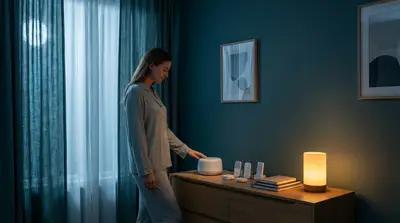
- Warm, dimmable lamps: Swapping overhead bright lights for warmer, lower-intensity lamps in the evening supports the natural winding down of alertness. Look for bulbs labeled “warm white” (around 2700K).
- Smart lights or plugs: These can be scheduled to gently dim or shift color temperature in the evening, creating a consistent visual cue that the day is closing.
Calming way to use them: Think of evening light changes as a “sunset indoors.” Aim to gradually reduce brightness and harsh, cool light 1–2 hours before bed, rather than flipping from full brightness to darkness all at once. If screens are necessary, pairing blue-light settings or glasses with shorter, more focused use helps keep stimulation in check.
Sound Management: Creating a Gentle Acoustic Buffer
Your brain continues to scan for potential threats even when you’re asleep. That’s why unpredictable or sharp noises—doors closing, traffic, a neighbor’s TV—can stir you from deeper stages of sleep.
Sound-shaping tools
- White noise and sound machines: These devices produce a steady sound (white, pink, or brown noise, or gentle nature sounds). By masking sudden environmental sounds, they can reduce awakenings and improve perceived sleep continuity, particularly in noisy settings.
- Fan-based noise: A simple fan can provide both cooling air and a gentle hum. For many people, this dual effect is soothing and practical.
- Soft, well-fitted earplugs: If you’re sensitive to noise, foam or silicone earplugs can reduce sound intensity. Choosing soft, comfortable designs and learning proper insertion is key to avoid discomfort.
Calming way to use them: Rather than trying to block out the world completely, think of these tools as creating a soft acoustic blanket. Pick a sound that feels neutral or slightly soothing—waves, rain, or a gentle fan—and allow it to sit in the background rather than focusing on it. If you share a room, agree together on a sound type and volume that feels acceptable to both people.
Temperature & Comfort: Products That Help Your Body Cool and Settle
Your body tends to fall asleep most easily when your core temperature is gently dropping. Environment, bedding, and sleepwear all influence how easily this happens.
Cooling and comfort-oriented products
- Breathable bedding and pajamas: Natural fibers like cotton, bamboo, or linen generally allow better airflow than heavy synthetics. Lightweight layers can help you adjust more precisely during the night.
- Mattress toppers and cooling pads: Some toppers use breathable foams or gel infusions; others use water-based or air-based systems to actively cool the sleep surface. For people who consistently overheat at night, these can reduce awakenings from discomfort.
- Adjustable duvets or layered blankets: Using multiple light layers instead of one very heavy blanket allows you to fine-tune warmth as your body temperature shifts during the night.
Calming way to use them: Focus on gentle experimentation rather than a perfect setup. Try small adjustments—switching pillow or sheet materials, lightening blankets, or lowering room temperature by 1–2°C—and notice how your body feels over several nights, rather than changing everything at once. The goal is a sleeping environment where you rarely think about your temperature at all.
Weight, Texture, and Touch: When “Cozy” Helps the Nervous System
Physical touch and pressure can have a quiet, regulating effect on the nervous system. Some products attempt to harness this for sleep.
Weighted blankets and similar tools
- Weighted blankets: Research is still emerging, but several small studies suggest that weighted blankets may help reduce restlessness and perceived insomnia symptoms in some people, particularly those who feel anxious at night. The gentle, evenly distributed pressure can feel like a contained, steady hug.
- Textured or plush bedding: Soft, familiar textures can add a sense of safety and comfort, which may indirectly support relaxation before sleep.
Important caveats: Weighted blankets are not appropriate for everyone—people with certain respiratory, cardiovascular, or mobility conditions, and young children, should avoid or use them only under guidance. When used, many manufacturers suggest a weight around 8–12% of body weight, but comfort and ease of movement matter more than exact numbers.
Calming way to use them: Treat these products as optional enhancements, not requirements. If a weighted blanket appeals to you, start with short trial periods—during reading or a quiet wind-down—and check in with your body for any signs of overheating or restriction. The right blanket should feel gently grounding, not heavy or confining.
Scent, Soundscapes, and Ritual: Products That Support a Calmer Mind
Sleep is not only about physiology; it’s also about what your mind associates with bedtime. Products that create consistent, soothing cues can gradually train your brain to recognize “this is the time we slow down.”
Aromatherapy and scent-based tools
- Essential oil diffusers: Some people find scents like lavender or chamomile calming. A number of studies suggest modest benefits of certain scents for anxiety and sleep quality, though the effects are often small and not universal.
- Lightly scented pillow sprays: A simple, consistent bedtime scent can become part of your mental “sleep script.”
Guided audio and soundscapes
- Meditation and breathing apps: Many offer specific sleep-focused programs: body scans, slow breathing, or calming visualizations. Evidence suggests these practices can reduce pre-sleep arousal and insomnia symptoms when used regularly.
- Story-based audio and soft music: Bedtime stories, low-key podcasts, and gentle music can shift attention from rumination to something neutral and predictable, easing mental restlessness.
Calming way to use them: Choose one or two cues you genuinely enjoy and repeat them most nights in a similar order—perhaps a short breathing exercise with a familiar scent, or a 10-minute body scan with a particular background sound. Over time, your brain begins to pair these cues with winding down, making it easier to transition toward sleep without forcing it.
When Sleep Products Help Most: How to Use Them Without Pressure
The most effective role for sleep products is supportive, not controlling. A few guiding principles can keep them helpful and gentle:
- Think environment first, not “cure”: Products work best when they reduce barriers to sleep—light, noise, discomfort—rather than promising to erase insomnia or stress.
- Change one thing at a time: This makes it easier to notice what genuinely helps, and it prevents your routine from becoming complicated or stressful.
- Watch for “sleep performance” pressure: If using a product makes you feel monitored, judged, or tense (“I have to sleep better now that I bought this”), step back. Sleep trackers in particular can sometimes increase anxiety for some people, even as they help others feel informed.
- Align with gentle habits: Products pair especially well with low-pressure behaviors such as consistent wake times, a short pre-bed relaxation practice, and limiting very stimulating tasks close to bedtime.
If sleep remains consistently difficult despite environmental changes and supportive tools—especially if it affects your mood, focus, or daily functioning—it may be worth speaking with a healthcare provider or sleep specialist. Cognitive behavioral therapy for insomnia (CBT‑I), for example, has strong scientific support and can be combined with thoughtful use of sleep products.
Conclusion
Sleep products can’t replace your body’s own rhythms, but they can help clear a path for those rhythms to unfold more smoothly. Gentle light, steady sound, comfortable bedding, and soothing sensory cues act like quiet companions, making your nights more predictable, your bedroom more welcoming, and the transition to rest a little less effortful.
There’s no single “right” setup. What matters most is how your body and mind feel: calmer evenings, fewer disruptions, and a sense that bedtime is becoming a softer place to land. By approaching sleep products as supportive tools—rooted in science, used with curiosity, and free from perfectionism—you give your natural capacity for rest more room to breathe.
Sources
- National Institute of Neurological Disorders and Stroke – Brain Basics: Understanding Sleep – Overview of how sleep works, including circadian rhythms and sleep stages
- Centers for Disease Control and Prevention – How Light Affects Our Sleep – Explains the relationship between light exposure, melatonin, and sleep timing
- Harvard Medical School – Blue Light Has a Dark Side – Summarizes research on blue light, screens, and circadian disruption
- Cleveland Clinic – Weighted Blankets: What You Need to Know – Discusses benefits, risks, and appropriate use of weighted blankets
- National Library of Medicine – Cognitive Behavioral Therapy for Insomnia (CBT‑I) – Reviews evidence for CBT‑I and outlines its role in treating chronic insomnia