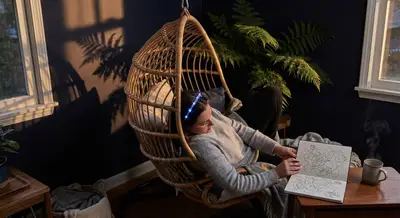
Slow Evenings, Steady Nights: A Science-Guided Wind-Down Ritual
Evenings don’t have to feel like a race toward bedtime. When you move slowly and intentionally, your body’s own chemistry starts doing the work for you—lowering stress hormones, cooling your core temperature, and preparing your brain for steady, restorative sleep. This isn’t about perfection or strict rules. It’s about creating a gentle, repeatable rhythm that tells your nervous system: “You’re safe. You can let go now.”
This guide walks you through a calm, evidence-informed evening ritual, mixing simple techniques, clear science, and a few thoughtful product suggestions that can support—rather than control—your rest.
Let Your Nervous System Downshift First
Most of us try to go from “busy and alert” to “asleep” in one sharp turn. Physiologically, that’s like trying to brake hard at highway speed. The body needs a downshift.
Your nervous system lives on a spectrum from “fight-or-flight” (sympathetic activation) to “rest-and-digest” (parasympathetic activation. Gentle, repetitive routines signal the parasympathetic side to take the lead. Research shows that consistent pre-sleep habits—done roughly the same way and at the same time—can shorten how long it takes to fall asleep and improve sleep quality over time.
A calming wind-down doesn’t have to be long or elaborate. Even 20–40 minutes of predictable quiet activity can help: dimming lights, sipping something warm and non-caffeinated, tidying a small space, or reading light, non-stimulating material. The goal is not productivity; it’s rhythmic predictability. Over days and weeks, your brain starts to associate these cues with safety and rest.
You may notice the benefits subtly at first: less mental chatter, fewer evening spikes of stress, and an easier transition into sleep. Think of it as building a soft runway for your night.
Light, Temperature, and Chemistry: The Invisible Sleep Signals
Behind the scenes, your body relies on simple environmental cues to plan sleep—especially light and temperature. You can work with these instead of against them.
Bright light, especially blue-rich light from screens and LEDs, suppresses melatonin, the hormone that helps coordinate your sleep-wake cycle. Studies show that exposure to bright screens in the hour or two before bed can delay melatonin release and shift your internal clock later. Dimming your space in the last 1–2 hours before sleep—turning off overhead lights, using lamps or warm-toned bulbs, and lowering screen brightness—gently tells your brain night is coming.
Temperature also plays a quiet but powerful role. As you approach bedtime, your core body temperature naturally starts to fall; this drop supports sleep onset. A cooler room (often in the range of about 60–67°F / 15–19°C for many people) can make it easier to fall asleep and stay asleep. Warm showers or baths 1–2 hours before bed can help as well: as you cool off afterward, your core temperature drops, reinforcing the body’s natural signal to wind down.
These adjustments don’t require major lifestyle changes—just softer light, cooler air, and a bit more respect for your body’s nightly rhythm. Over time, they help your internal clock keep more regular, making relaxation feel less like a struggle and more like a natural slide.
A Gentle Wind-Down Sequence You Can Actually Keep
Ritual is more important than perfection. Below is a calm, flexible sequence you can adapt to your life. You don’t have to do every step every night; consistency matters more than completeness.
About 90 minutes before bed: loosen your grip on the day
- Step away from heavy decision-making, intense work, or emotionally charged conversations if possible.
- Capture lingering tasks on paper or in a simple note: “Tomorrow, I’ll handle…” This short “brain download” helps reduce mental looping when your head hits the pillow.
About 60 minutes before bed: create a soft environment
- Dim the lights significantly and switch from bright overheads to lamps or warm-toned bulbs.
- Lower screen brightness, use blue-light filters, or consider moving screens out of direct view.
- If you can, choose one calming activity: reading, stretching, puzzles, or listening to quiet audio.
About 30 minutes before bed: relax the body
- Try a simple stretching or mobility routine, focusing on shoulders, neck, hips, and lower back.
- Pair movement with slow breathing (for example, inhale through the nose for 4 seconds, exhale through the mouth for 6–8 seconds).
- If thoughts are busy, gently note them without judgment, returning attention to your breath or the physical sensations of stretching.
Just before bed: rhythm over rules
- Keep your final steps predictable: washing your face, brushing teeth, setting out clothes for tomorrow.
- When you get in bed, choose one relaxing mental focus: a body scan, calm music, or a soothing audio track. Let this be your nightly “closing ritual.”
If you miss a step or have a chaotic evening, that’s okay. Returning to these cues the next night keeps reinforcing the association: this is what we do before we rest.
Two Science-Backed Relaxation Tools You Can Use in Minutes
Some techniques are particularly well-studied for calming the nervous system. Two you can start tonight:
1. Slow, Extended Exhale Breathing
Breathing patterns influence heart rate and nervous system activity. Slower breathing with a slightly longer exhale can increase parasympathetic (rest-and-digest) tone and promote a sense of calm.
You might try:
- Inhale through the nose for about 4 seconds
- Gently hold for 1–2 seconds (optional)
- Exhale through the mouth for 6–8 seconds
- Repeat for 5–10 minutes
The exact counts are flexible; what matters is comfort and a longer, smoother exhale. Many people find this especially grounding if practiced consistently at the same time each evening. Over a week or two, you may notice you can downshift from “wired” to “winding down” more quickly.
2. Body Scan with Soft Attention
A body scan helps shift attention from ruminating thoughts into physical sensations, which can reduce cognitive arousal—a common barrier to sleep.
Try lying on your back or sitting comfortably. Slowly bring awareness to one area at a time: toes, feet, calves, knees, thighs, hips, abdomen, chest, shoulders, arms, hands, neck, face, and scalp. In each area, notice sensations (tightness, warmth, tingling, or nothing at all) without trying to change them. If you like, on each exhale imagine that part of your body gently softening or sinking into support.
Even a 10–15 minute body scan can help signal safety and release. Practicing regularly trains your brain to associate this process with sleep readiness.
Thoughtful Product Choices That Support, Not Control, Your Rest
Products can’t “fix” sleep, but some can gently support relaxation when used wisely. The key is to treat them as tools—layered onto healthy habits—not as cures.
Environment and Comfort
- Mattress and pillow: A surface that supports your usual sleep position (side, back, stomach) can reduce micro-awakenings from discomfort. Medium firmness often works well for many adults, but comfort is personal. If a new mattress isn’t possible, a quality mattress topper and a supportive pillow can still make a meaningful difference.
- Weighted blankets: Some people find that moderate pressure from a weighted blanket feels grounding and reduces pre-sleep restlessness. Research is still emerging, but initial studies suggest that for some individuals, gentle pressure may support relaxation and perceived sleep quality. If you experiment, start with a weight that feels comforting, not restrictive—often around 7–12% of your body weight.
- Blackout curtains or eye masks: Reducing light exposure during sleep can help maintain melatonin production and minimize awakenings, especially if you live in a bright area.
Sound and Relaxing Audio
- White noise or brown noise machines: These can mask unpredictable sounds (traffic, neighbors, hallway noise) that might otherwise wake you. Choose a sound profile that feels neutral and non-distracting.
- Calm audio content: Guided relaxation, nature sounds, or soft, slow music can aid the transition from wake to sleep. Look for options designed to be non-stimulating—no sudden volume changes, no suspenseful content.
Gentle Supplements and Devices: Use With Care
It’s important to respect that supplements and sleep tech can have real effects and aren’t always benign. Before adding anything new, especially if you take medication or have health conditions, speaking with a healthcare professional is wise.
- Melatonin: Short-term, low-dose melatonin (often in the range of 0.5–3 mg, taken about 1–2 hours before bed) may help some people who have delayed sleep timing or are adjusting to a new timezone. It’s not a sedative and works best as a “clock cue,” not a nightly sedative habit. Long-term, daily use should be discussed with a clinician.
- Light therapy lamps: For people with irregular schedules or late sleep tendencies, carefully timed bright light in the morning can help shift and stabilize the body clock. Using these should be guided by clear instructions or professional advice, as timing and intensity matter.
- Wearable trackers: Sleep trackers can offer insight into patterns, but it’s easy to become anxious about numbers (a phenomenon sometimes called “orthosomnia”). If you use a device, consider focusing on broad trends—bedtime consistency, total time in bed—rather than perfection in every metric.
The test for any product: does it make your nights feel gentler and your days more functional without adding new stress or dependency? If not, it may be worth stepping back.
If Sleep Still Feels Out of Reach
Even with thoughtful routines, some people continue to struggle with falling asleep, staying asleep, or waking too early. When sleep difficulty persists most nights for more than three months and affects your daily functioning, it may be time to seek additional support.
Evidence-based treatments like Cognitive Behavioral Therapy for Insomnia (CBT‑I) have strong research backing and often outperform sleeping pills in long-term effectiveness. CBT‑I works by gradually shifting unhelpful sleep habits, addressing anxious thinking around sleep, and recalibrating your body clock and sleep drive. It can be delivered in person, via telehealth, or through reputable digital programs.
If you suspect a sleep disorder such as sleep apnea (loud snoring, gasping at night, morning headaches), restless legs syndrome (uncomfortable leg sensations eased by movement at night), or a circadian rhythm disorder, a healthcare provider or sleep specialist can help you explore testing and treatment. Seeking help is not a failure of your routine—it’s an act of care for your whole system.
Conclusion
Relaxation before sleep isn’t a luxury; it’s a quiet conversation with your nervous system, repeated night after night. By softening light, honoring your body’s temperature shifts, practicing simple breath or body-based techniques, and choosing supportive products with care, you create conditions in which rest is more likely to emerge on its own.
Progress can be subtle and uneven. Some nights will feel easier than others. Yet with consistent, gentle routines, your evenings can gradually move from rushed and restless to spacious and steady—inviting your body to do what it’s been designed to do all along: settle, repair, and restore.
Sources
- National Institute of Neurological Disorders and Stroke – Brain Basics: Understanding Sleep – Overview of how sleep works, including brain regions and hormones involved
- National Institutes of Health – Melatonin: What You Need To Know – Evidence-based guidance on melatonin, dosing, safety, and appropriate use
- Harvard Medical School – Blue Light Has a Dark Side – Explains how evening light and screens affect melatonin and circadian rhythms
- American Academy of Sleep Medicine – Cognitive Behavioral Therapy for Chronic Insomnia – Summary of CBT‑I as a first-line treatment for chronic insomnia
- Centers for Disease Control and Prevention – Sleep and Sleep Disorders – General sleep recommendations, health impacts of poor sleep, and links to additional resources