A Quiet Evening Blueprint: Science-Based Rituals to Unwind Your Day
Evenings can easily blur into scrolling, snacking, and half-watching shows while your mind keeps racing. Underneath it all, your body is quietly asking for something simpler: safety, predictability, and gentle cues that it’s time to power down. This article offers a calm, science-informed “blueprint” for winding down—one you can adapt to your own life. No perfection, no elaborate routines—just small, steady steps that help your nervous system exhale and your sleep become more restorative.
How Your Body Knows It’s Time to Relax
Your ability to relax is rooted in biology, not willpower. Throughout the day, your nervous system moves between:
- Sympathetic activation (alert, focused, sometimes anxious)
- Parasympathetic activation (rest, digestion, recovery)
Relaxation happens when the parasympathetic branch—often called the “rest-and-digest” system—takes the lead. Certain cues help switch that system on:
- Dimming light signals your brain to release melatonin, the hormone that helps regulate sleep timing.
- Lowering body temperature (a cool room, a warm bath that’s followed by cooling) nudges your body toward sleepiness.
- Predictable routines tell your brain, “We’ve been here before; it’s safe to let go.”
- Slower breathing feeds back to the brain that you’re not in danger.
None of these cues need to be dramatic. The power comes from consistency. A simple, repeatable pattern of gentle signals teaches your brain that evenings are for unwinding, not bracing.
Building a Soft-Edged Evening: A Gentle Timeline
Think of your evening not as one big “sleep hack” but as a series of quiet transitions. Here’s a framework you can adjust to your schedule.
2–3 Hours Before Bed: Start Turning Down the Volume of the Day
This is where you gradually reduce stimulation.
- Light: If possible, switch from bright overhead lights to softer lamps or warm-toned bulbs. Light exposure in the evening can delay melatonin release, nudging your natural sleep time later.
- Food: Aim to finish large, heavy meals at least 2–3 hours before sleep. Very late, heavy eating can disturb sleep quality for some people.
- Caffeine: Caffeine’s effects can linger for 6+ hours. If you’re sensitive, make your last caffeinated drink mid-afternoon and choose herbal or decaf options later.
- Noise: If your environment is loud, gentle background sounds (a fan, white noise, or soft music) can reduce the impact of sudden noises that might keep your body on alert.
This isn’t about rigid rules; it’s about gently nudging your surroundings toward “less.”
60–90 Minutes Before Bed: Create a Small, Predictable Ritual
Choose 2–4 calming activities you can repeat most nights. Over time, they become powerful cues.
Some ideas:
- Warm shower or bath: Warm water raises skin temperature; when you step out and cool down, your body often becomes more drowsy. This temperature shift can support natural sleep onset.
- Very light stretching or yoga: Slow, non-strenuous movement can ease muscle tension built up from the day and help quiet “body-level” restlessness.
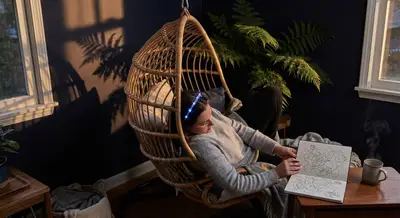
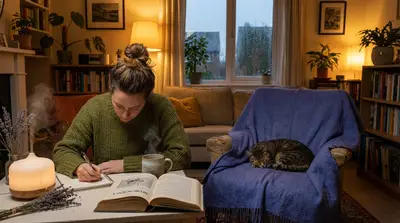
- Paper journaling: Offload thoughts, worries, or to-do lists onto paper. This can reduce the mental “replay” that often shows up when you turn off the lights.
- Quiet reading: A paper book or basic e-reader (without apps or bright blue light) can give your mind a gentle narrative to follow that isn’t stressful.
Aim for softness in both activity and mindset. If you miss a step, that’s okay; the ritual works over weeks and months, not one perfect night.
Simple, Evidence-Backed Relaxation Techniques for Bedtime
Once you’re in bed, the focus shifts from doing to unwinding. These research-supported techniques can help calm your nervous system.
1. Extended Exhale Breathing
Your exhale is closely tied to the parasympathetic nervous system. Lengthening it can send a “stand down” signal to your body.
Try this:
- Inhale gently through your nose for about 4 seconds.
- Exhale slowly through your mouth or nose for about 6–8 seconds.
- Pause briefly, then repeat for 3–5 minutes.
There is evidence that slower, controlled breathing can reduce heart rate and support a calmer state that is more compatible with falling asleep.
2. Progressive Muscle Relaxation (PMR)
Tension in the body often mirrors tension in the mind. PMR helps loosen both.
A basic sequence:
- Start at your feet. Gently tense the muscles (not painfully) for about 5 seconds.
- Release and notice the contrast for about 10–15 seconds.
- Move upward: calves, thighs, hips, abdomen, hands, arms, shoulders, face.
PMR has been studied for insomnia and anxiety, and many people find that systematically relaxing muscles makes drifting off feel more natural.
3. Anchored Attention: A Gentle Focus for a Busy Mind
Instead of trying to “clear your mind,” give it something neutral and repetitive to rest on.
Options:
- Count your breaths: Inhale (one), exhale (two), up to ten, then start again.
- Visualize a calming, familiar place: a quiet room, a forest path, a beach at dusk.
- Use a simple phrase: On the inhale, “I am here.” On the exhale, “It is safe to rest.”
When your mind wanders (it will), gently return to your chosen anchor without judgment. Over time, this trains a kinder relationship with your own thoughts.
Thoughtfully Chosen Tools: Products That Can Genuinely Help
Products can’t replace habits, but the right tools can make the path to relaxation smoother. Here are some categories to consider, along with the science behind them.
1. Light and Screen Management
Blue-light–filtering glasses or apps:
Evening exposure to blue-enriched light—especially from phones and computers—can interfere with melatonin timing. Filters that reduce blue light or “night mode” settings can lower this impact, especially when combined with dimmer overall lighting. They’re not magic, but they can be a meaningful nudge in the right direction.
Warm, dimmable lamps:
Using warmer color temperatures (often labeled 2700K–3000K) in the evening can be less disruptive to your circadian rhythm than bright, cool-white lighting. A simple bedside lamp with a low-watt, warm bulb can support a calmer environment.
2. Sound and Calm Audio
White noise or gentle sound machines:
Continuous, low-level sounds can help “mask” sudden noises and may reduce awakenings in noisy environments. Many people find soft rain, distant waves, or neutral white noise calming as part of their routine.
Guided relaxation or meditation apps:
Apps that offer sleep stories, breathing exercises, or body scans can gently guide your attention away from worry. Look for those with:
- A timer or auto-off function
- Calm, unhurried pacing
- Simple language without pressure to “sleep now”
3. Bedding and Temperature Comfort
Cooling or breathable bedding:
Because your core body temperature normally drops at night, sleeping in a room that’s too warm can make it harder to fall and stay asleep. Lightweight, breathable materials (like cotton or linen) and a room kept moderately cool are often more sleep-conducive.
Weighted blankets (used mindfully):
Some people report feeling more settled under a weighted blanket, possibly due to deep-pressure stimulation signals that can be calming. They’re not right for everyone (especially those who feel overheated or claustrophobic), but for some, they provide a comforting sense of groundedness.
When Relaxation Feels Out of Reach
If you’re trying these ideas and still feel wired most nights, it’s not a sign of failure. Persistent difficulty relaxing or sleeping can be linked to stress, anxiety, medical conditions, or medications.
It may help to:
- Track patterns: Keep a brief log (bedtime, wake time, wake-ups, caffeine, major stressors). Patterns often appear after a couple of weeks.
- Discuss with a healthcare provider: Ongoing insomnia or very disrupted sleep (such as loud snoring with gasping, or waking unrefreshed despite enough hours in bed) can signal sleep disorders that deserve careful attention.
- Consider structured support: Cognitive Behavioral Therapy for Insomnia (CBT-I), often delivered by trained clinicians or digital programs, has substantial evidence behind it for improving sleep over time.
Reaching out for help is a practical step, not a defeat. Sometimes the most relaxing thing you can do is share the load with a professional who understands sleep and stress.
Conclusion
Relaxation is less about forcing your mind to be quiet and more about giving your body and brain a consistent, gentle environment in which rest is possible. Soft light, predictable routines, slower breathing, and thoughtfully chosen tools can all send the same message: you are safe enough to let go.
Start small—perhaps by dimming lights 30 minutes earlier, adding a two-minute breathing practice, or creating a simple bedtime ritual you can repeat most nights. Over time, these quiet signals add up, guiding your system out of constant alert mode and into a steadier, deeper rest.
Sources
- National Institutes of Health – Your Guide to Healthy Sleep (NIH) – Overview of sleep biology, circadian rhythms, and practical sleep guidance
- Centers for Disease Control and Prevention – Sleep and Sleep Disorders – Evidence-based information on healthy sleep habits and common sleep problems
- Harvard Medical School – Blue Light Has a Dark Side – Explains how evening light exposure affects melatonin and sleep timing
- Cleveland Clinic – Progressive Muscle Relaxation – Step-by-step guidance and benefits of progressive muscle relaxation
- Mayo Clinic – Insomnia: Diagnosis and Treatment – Details on when to seek help and evidence-based treatments, including CBT-I