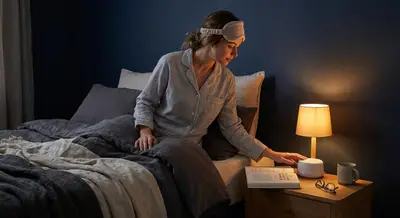
Slow Evenings, Deep Sleep: A Calmer Path to Nighttime Rest
Evenings don’t need to be perfect to lead to good sleep. They just need to be gentler, a little slower, and more aligned with how your body is wired to wind down. This guide blends calming, science-backed strategies with simple product ideas so you can reshape your nights in a way that feels realistic—not rigid.
Think of this as a soft reset for your evenings: quieter light, steadier rhythm, and kinder expectations of yourself and your sleep.
Aligning With Your Body Clock: The Quiet Power of Routine
Your sleep is deeply guided by your circadian rhythm—your internal 24‑hour clock. It responds most strongly to light, regular timing, temperature, and social cues. When those are steady, sleep tends to become steadier too.
A calming, research-informed approach:
Pick a “protected wind-down window.” Choose a 30–60 minute period before bed that is reserved for low-stimulation activities: reading, stretching, journaling, or quiet conversation. Ideally, keep the start time consistent, even on weekends. Consistent timing reinforces your internal clock, which multiple sleep centers and the American Academy of Sleep Medicine emphasize as a core sleep strategy.
Make your environment signal “evening.” Dim lights and lower color temperature (warmer, amber tones) as bedtime approaches. Bright, cool-toned lighting can suppress melatonin, the hormone that signals your body it’s time for sleep.
Anchor your day with a consistent wake time. Paradoxically, sleep often improves more from a regular waking time than from obsessing over bedtime. Getting up at the same time helps your body learn when to feel sleepy later.
Let your routine be flexible, not fussy. The goal isn’t a perfect ritual—it’s a predictable pattern. If some nights are busier, preserve at least 10–15 minutes of quiet, screen-free time to maintain the signal to your brain that night is for rest.
Helpful products (optional, not essential):
- A warm, dimmable bedside lamp or smart bulb that can shift to amber/light orange tones in the evening.
- A simple analog alarm clock, so you can keep your phone out of immediate reach and reduce late-night scrolling.
Light, Screens, and Sleep: Calming Your Brain’s “Daytime” Signals
Your brain treats light exposure as information about what time it is. Daytime light helps wakefulness; night-time light—especially blue-enriched light from screens—can trick your brain into thinking it’s still daytime.
To gently realign:
Protect at least 30–60 minutes of low-light time. Dim room lights and shift to warmer tones in the hour before bed. Even modest reductions in light intensity can support melatonin release.
Create a “soft landing” off screens. Rather than demanding zero screens, try a staged approach:
- First 20 minutes: wrap up digital tasks (email, messages, to‑do list).
- Next 20–40 minutes: transition to non-screen activities—paper book, journaling, very gentle stretching, or a conversation.
Use tech as a bridge, not a barrier. If you rely on your phone:
- Enable night mode or blue light reduction.
- Reduce screen brightness.
- Try audio‑only content (audiobooks, calming podcasts, sleep stories) with the screen off.
Morning light matters too. Exposure to natural light within an hour of waking strengthens your circadian rhythm and can make it easier to feel sleepy at night. A short walk outside or just sitting by a bright window can help.
Helpful products:
- Blue-light–filtering glasses if evening screen use is hard to avoid. Evidence is still evolving, but they may reduce some short-wavelength light exposure.
- A dawn-simulation alarm/light that gently brightens in the morning can support your body clock, especially in darker months or windowless spaces.
Calming the Nervous System: Gentle Techniques for a Softer Night
Many people don’t have a “sleep problem” as much as an “overloaded nervous system problem.” When worries, to‑dos, or general agitation are high, your body stays in a state of alert, making sleep feel distant.
You can’t force sleep—but you can support your nervous system toward a calmer state:
Extend your exhale. Slow breathing with longer exhales can shift your body toward a more relaxed, parasympathetic state.
Try this simple pattern for 3–5 minutes:
- Inhale gently through the nose for 4 seconds.
- Exhale softly through the mouth or nose for 6 seconds.
- Keep the breath comfortable, not forced.
Do a “mental download” before bed. Keep a notebook by your bed and write down:
- Anything you’re worried about.
- Key tasks for tomorrow.
Research on expressive writing suggests that offloading concerns can reduce nighttime rumination for some people, especially if it becomes a consistent, short practice.
Use grounding for racing thoughts. If your mind spirals when you lie down, try the 5–4–3–2–1 grounding technique:
- 5 things you can see
- 4 things you can feel
- 3 things you can hear
- 2 things you can smell
- 1 thing you can taste
This doesn’t solve worries but can lower their grip in the moment.
Replace “I must sleep now” with “I’ll rest now.” Pressure to sleep often makes sleep more elusive. Instead, focus on creating a restful state: lying quietly, breathing slowly, eyes closed. Even this quiet rest can be restorative and often leads naturally to sleep.
Helpful products:
- A soft, supportive eye mask to reduce light and create a sense of cocooning.
- A weighted blanket (usually 7–12% of body weight) can provide gentle pressure that some people find soothing, though it’s not suitable for everyone (avoid if you have breathing difficulties or mobility limitations; check with a clinician if unsure).
Temperature, Comfort, and Sleep: Quiet Tweaks That Make a Big Difference
Your body naturally cools down as it prepares for sleep. Helping this process along with your environment can make falling and staying asleep easier.
Evidence-informed adjustments:
Keep the bedroom on the cooler side. Research suggests a bedroom temperature somewhere around 60–67°F (15.5–19.5°C) often supports better sleep for many adults, though comfort matters most. If your feet feel icy, warm socks can help you feel relaxed even in a cooler room.
Choose breathable bedding. Natural fibers like cotton, linen, and some bamboo fabrics can help regulate temperature and moisture. Overheating during the night often leads to tossing and turning.
Consider a short, warm shower or bath 1–2 hours before bed. Counterintuitively, warming your skin can help your core body temperature drop afterward, which supports sleep onset.
Minimize noise spikes. Continuous background sound is less disruptive than unpredictable noise.
- If your surroundings are noisy, white noise or brown noise (a deeper, softer sound profile) can mask sudden sounds.
- Earplugs can also help, but comfort and safety should guide your choice.
Helpful products:
- Breathable mattress topper if your mattress tends to trap heat.
- A white noise machine or app that offers customizable sound profiles.
- Blackout curtains if early morning or street lighting enters your room.
Evening Habits: Food, Caffeine, and Alcohol With Less Guesswork
What you consume—and when—can gently support or subtly disturb your sleep.
With a calming, moderate approach:
Caffeine timing matters more than the absolute amount. Caffeine can linger in the body for 5–7 hours or more. Many sleep experts suggest avoiding caffeine roughly 6 hours before bedtime. If you’re sensitive, earlier might be better.
Alcohol can fragment sleep. It may help you fall asleep faster, but it tends to:
- Reduce REM sleep
- Increase awakenings in the second half of the night
Aim to finish alcohol at least a few hours before bed, and notice how even small amounts affect you personally.
Evening meals: gentle, not heavy. Very large, rich, or spicy meals close to bedtime can cause discomfort or reflux. A lighter meal or earlier dinner often feels more comfortable. If you’re hungry later, a small snack with a mix of complex carbohydrates and a little protein (such as a banana with a small spoon of nut butter) can be soothing for some people.
Hydration curve. Adequate hydration during the day matters, but heavy fluid intake right before bed can increase nighttime awakenings to use the bathroom. Consider shifting most of your fluids earlier and tapering lightly in the last hour or two.
Helpful products:
- Herbal teas like chamomile, lemon balm, or passionflower blends (caffeine‑free) can serve as a calming ritual. Research is mixed but suggests potential mild benefits and strong placebo/ritual effects.
- A comfortable water bottle that reminds you to drink throughout the day, so you’re not overcompensating at night.
When Sleep Won’t Come: A Gentle, Science-Informed Plan
Everyone has difficult nights. The goal is not to eliminate them but to keep them from turning into ongoing struggles.
A calm, evidence-backed framework:
If you’re awake and agitated for ~20–30 minutes, gently reset. Many cognitive behavioral approaches for insomnia (CBT‑I) suggest leaving the bed if you feel wired and frustrated. Go to a dim, quiet space and do something low-stimulation: reading a familiar book, listening to soft audio, or simple stretching. Return to bed when you feel more drowsy.
Protect the association: bed = sleep and rest. Try to reserve your bed mostly for sleep and quiet rest. Watching intense shows, working, or arguing in bed can strengthen an association between bed and wakefulness or stress.
Avoid clock-watching. Seeing the time repeatedly can increase pressure and anxiety. If you must keep an alarm near you, turn the clock face away.
Shift your inner dialogue. Instead of “I can’t function tomorrow without perfect sleep,” try:
- “My body knows how to sleep; it’s okay if tonight is imperfect.”
- “I can still get through tomorrow, even if I’m more tired than usual.”
This aligns with CBT‑I principles that address unhelpful sleep-related thoughts.
Know when to seek more support. If poor sleep lasts most nights for more than a few weeks, or if you suspect conditions like sleep apnea (loud snoring, gasping, pauses in breathing) or restless legs, it’s wise to consult a clinician or sleep specialist. Evidence-based treatments—including CBT‑I—can be highly effective.
Helpful products:
- A soft reading light that clips to a book, to avoid bright overhead lights during a middle-of-the-night reset.
- Guided sleep/relaxation apps that offer CBT‑I–informed programs, body scans, or gentle meditations (many have free tiers).
Conclusion
Deep, restorative sleep is less about hacking your body and more about cooperating with it. When your evenings become slower, your light softer, your breathing steadier, and your environment more comfortable, you create conditions where sleep can arrive on its own schedule.
You don’t need to apply every strategy at once. Begin with one or two gentle changes—a more consistent wake time, dimmer lights at night, a short breathing practice, or a cooler bedroom. Let those settle in, then layer in others if they feel helpful.
Progress in sleep is often quiet and gradual. Over days and weeks, these small, science-backed adjustments can add up to something meaningful: nights that feel less like a battle, and more like a return to a natural, calmer rhythm.
Sources
- National Heart, Lung, and Blood Institute – Sleep Deprivation and Deficiency – Overview of how sleep works, the role of circadian rhythms, and practical sleep health guidance.
- Centers for Disease Control and Prevention – Sleep and Sleep Disorders – Evidence-based recommendations on sleep duration, sleep hygiene, and when to seek medical help.
- Harvard Medical School – Blue Light Has a Dark Side – Explains how evening light and screens affect melatonin and circadian rhythm, with practical tips.
- American Academy of Sleep Medicine – Sleep Hygiene – Clinical guidance on routines, environment, and behaviors that support healthy sleep.
- National Library of Medicine – Cognitive Behavioral Therapy for Insomnia (CBT‑I) Review – Research review on CBT‑I principles and their effectiveness in treating chronic insomnia.