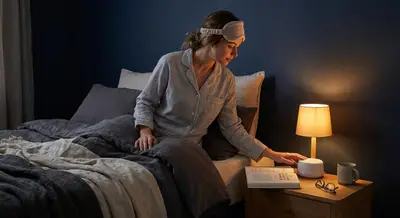
Rest That Lasts: A Science-Rooted Approach to Rebuilding Your Sleep
Sleep doesn’t need to be perfect to be powerful. It needs to be consistent, kind, and gently supported by evidence-based choices. Instead of chasing “magic fixes,” you can build a sleep life that feels steady and trustworthy—one small decision at a time. This guide will walk you through calming, science-backed ways to rebuild your relationship with sleep, with practical techniques and product suggestions that support, rather than override, your natural rhythms.
Understanding Your Sleep System (So You Can Work With It, Not Against It)
Your body is constantly keeping time. Two main systems shape your sleep: your circadian rhythm (your internal clock) and your sleep drive (how long you’ve been awake). When these line up, sleep feels natural; when they don’t, nights feel restless and choppy.
Your circadian rhythm follows a roughly 24-hour cycle, influenced by light, meals, movement, and social cues. Morning light tells your brain it’s daytime, boosting alertness. Darkness in the evening allows melatonin—a hormone that signals “night mode”—to rise. At the same time, your sleep drive slowly builds across the day as a chemical called adenosine accumulates in your brain; staying awake longer increases your need for sleep, while long naps, late caffeine, or irregular schedules can weaken that signal.
Instead of seeing “bad sleep” as a personal failure, it helps to see it as a timing mismatch. The goal isn’t to force sleep but to create conditions where your internal clock and sleep drive are gently aligned. That means being thoughtful about light, caffeine, naps, and timing—small pieces that quietly add up to big change over weeks, not days.
Calming Your Nights by Reshaping Your Days
Deep, restorative nights are usually built during the day. What you do from morning to afternoon can either support or scatter your sleep system.
Light is one of the strongest signals. Getting 10–30 minutes of natural light within a couple of hours of waking helps anchor your circadian rhythm, especially if you get that light outside. It doesn’t have to be sunny; outdoor light, even on overcast days, is still much stronger than typical indoor lighting. Later in the day, dimming overhead lights and relying more on lamps can help your brain gradually shift toward night mode.
Caffeine can be both helpful and disruptive. It blocks adenosine, making you feel less sleepy—but because its half-life is about 5–6 hours for many people, afternoon or evening caffeine can still be in your system at bedtime. A simple experiment is to set a “caffeine curfew” 8–10 hours before you plan to sleep, then adjust based on how sensitive you feel.
Movement also matters. Regular, moderate exercise improves sleep quality and helps you fall asleep faster, but intense workouts very close to bedtime may make winding down harder for some people. A calm balance is ideal: consistent activity most days, finishing more vigorous exercise at least a few hours before bed when possible.
By gently tuning these daytime levers—light, caffeine, and movement—you’re not forcing sleep. You’re setting your internal system up so that night feels like a natural landing, not a struggle.
Creating a Bedroom That Helps Your Brain Exhale
Your sleeping space sends powerful, often unconscious, signals to your brain. A bedroom associated with work, stress, or constant phone use keeps your nervous system on alert; one that feels quiet, cool, and predictable helps your brain recognize: “Here, we rest.”
Temperature is a foundational piece. Your body naturally cools slightly at night to initiate sleep. Most sleep researchers recommend a bedroom temperature somewhere around 60–67°F (15–19°C) for adults, though you can adjust within that range to what feels comfortable. Breathable bedding, moisture-wicking sheets, and a lighter comforter can help your body offload excess heat, especially if you tend to overheat.
Light control is the next layer. Even small amounts of light—such as from streetlamps or electronic devices—can interfere with melatonin and fragment sleep. Blackout curtains or a well-fitting sleep mask can make a meaningful difference, especially for shift workers or anyone in a bright city environment. Dimming or switching off indicator lights on electronics (or covering them with tape) can reduce those subtle cues that keep your brain slightly vigilant.
Noise doesn’t always need to be eliminated; sometimes it just needs to be made predictable. A simple white noise machine or app smooths out sudden sounds like traffic or hallway noise by wrapping them in a neutral, steady sound environment. Many people with light sleep find that this turns an unpredictable soundscape into a consistent background hum their brain can more easily ignore.
Together, these changes help turn your bedroom into a cue for rest rather than a reminder of wakefulness. Over time, entering that space can itself become a calming signal.
Gentle Tools and Products That Support Natural Sleep
Not all sleep products are equal. The most helpful ones tend to work with your body’s biology—not override it. Here are categories of products that can quietly support your sleep without promising unrealistic overnight miracles.
Weighted blankets provide gentle, evenly distributed pressure that may activate the parasympathetic nervous system—the “rest and digest” branch—helping reduce feelings of agitation for some people. Research suggests they can be particularly soothing for people with insomnia or anxiety, but they should be used with care in children, people with breathing issues, or anyone who feels restricted by weight. If you try one, start with a lighter option (often around 8–12% of your body weight) and see how your body responds.
Light-based tools can anchor your clock when natural light is limited. For those with early-night sleepiness in winter, or delayed sleep schedules, a medically reviewed light therapy box can be used in the morning to imitate bright outdoor light and reinforce daytime alertness. Always follow manufacturer guidelines and discuss with a healthcare professional if you have eye conditions or bipolar disorder, as light can influence mood regulation.
Sound-based supports are another gentle category. Purpose-built sleep sound machines that offer white noise, pink noise, or nature sounds can reduce awakenings caused by environmental noise. Some pillow speakers or headband-style sleep headphones allow calm audio (like guided relaxation, audiobooks, or gentle music) without glaring screens or bright light.
When considering supplements (like melatonin or magnesium), it’s important to treat them like tools, not default solutions. Melatonin is primarily a timing signal, not a sedative, and doses used in commercial products are often higher than physiologically necessary. It can be helpful in specific situations—such as jet lag or circadian rhythm disorders—under medical guidance. Magnesium may support relaxation in people who are deficient, but it’s not a cure-all. Checking with a healthcare professional before starting any supplement is wise, especially if you take other medications.
The most supportive sleep products are those that feel calming, safe, and sustainable for you—things you can integrate gently into your life without depending on them as the only pathway to rest.
Calming an Over-Busy Mind at Night
One of the most common sleep challenges isn’t physical—it’s mental. A racing mind, replaying the day or rehearsing tomorrow, keeps your nervous system in a state of subtle alarm. The good news is that your brain can be trained to shift gears with simple, repeatable tools.
A practical starting point is to create a “worry window” earlier in the evening. Set aside 10–20 minutes, well before bed, to sit with a notebook and calmly list concerns, tasks, and unfinished thoughts. Next to each item, write the next small action step and when you’ll address it. This doesn’t solve everything, but it sends a clear signal: there is a time for thinking about this, and it is not in bed.
At night, instead of trying to force thoughts away (which often makes them louder), you can practice gently redirecting attention. Breath-based techniques—like slow, even breathing where the exhale is slightly longer than the inhale—can nudge your nervous system toward calm. For example, inhaling through the nose for a count of 4, and exhaling through the mouth for a count of 6–8, for several minutes, can lower arousal and heart rate for many people.
Grounding techniques can also help. Quietly bringing your awareness to physical sensations—your body against the mattress, the weight of the blanket, the sound of a fan—helps shift focus from abstract worry to present-moment experience. Guided audio (such as body scans or soothing narratives) can provide an external focus so your mind doesn’t feel compelled to fill the silence with ruminating thoughts.
If you find yourself wide awake and frustrated for more than about 15–20 minutes, it can be kinder to your brain to briefly leave the bed. Move to a dimly lit, quiet space and do something low-stimulation—like reading a calm book or listening to gentle audio—until sleepiness returns, then go back to bed. This gradually teaches your mind to re-associate bed with drowsiness, not with struggle.
When to Seek Extra Support (And Why It’s a Strength)
There’s a difference between a few unsettled nights and a persistent sleep difficulty. If you’re regularly struggling to fall asleep, stay asleep, or feel rested despite giving yourself enough time in bed, it can be helpful—and deeply relieving—to involve a professional.
Cognitive Behavioral Therapy for Insomnia (CBT-I) is a structured, evidence-based approach that studies consistently show improves sleep in a lasting way. It gently reshapes the thoughts and habits that maintain insomnia, rather than just masking the symptoms. CBT-I can be delivered by trained clinicians in person or through validated digital programs. While it can feel intimidating to “work on sleep,” many people find that even a few weeks of guided support provide clarity and confidence.
Medical evaluation is also important if you notice loud snoring, gasping during sleep, frequent nighttime awakenings with a racing heart, restless or jerking legs, or morning headaches. Conditions like sleep apnea or restless legs syndrome are common and treatable, and addressing them can dramatically improve both sleep and daytime energy.
Reaching out for help is not a failure of willpower; it’s an acknowledgment that sleep is a complex biological process, influenced by many systems. Having a guide for that complexity can be a calm and empowering step.
Conclusion
Sleep is not a test you either pass or fail. It’s a living rhythm that responds to how you treat your days, your environment, and your mind. By working with your internal clock, reshaping your bedroom to feel safe and soothing, using gentle products wisely, and practicing soft mental strategies at night, you give your body and brain room to do what they’re designed to do: rest, repair, and reset.
Change often arrives quietly—slightly easier nights, a smoother morning, a bit more patience with yourself when a bad night appears. Over time, these small, science-guided shifts can help you build something deeply valuable: a sleep life you can gradually trust.
Sources
- National Institute of Neurological Disorders and Stroke – Brain Basics: Understanding Sleep – Overview of how sleep works, including sleep stages and regulatory systems
- Centers for Disease Control and Prevention – Sleep and Sleep Disorders – Evidence-based guidance on healthy sleep habits and public health information on sleep
- Harvard Medical School, Division of Sleep Medicine – Healthy Sleep – Educational resources on circadian rhythms, sleep hygiene, and the impact of lifestyle on sleep
- Mayo Clinic – Cognitive Behavioral Therapy for Insomnia – Explanation of CBT-I and how it helps treat chronic insomnia
- Cleveland Clinic – Weighted Blanket: Benefits & How to Use It – Discussion of how weighted blankets may influence relaxation and sleep, plus safety considerations