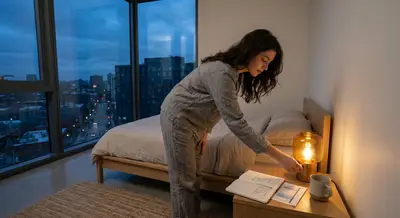
The Restful Brain: How Your Senses Quiet the Night
Sleep is not just something that “happens” when you get tired. It’s a coordinated shift in your brain and body, guided by light, sound, temperature, and even scent. When those signals are chaotic, sleep feels fragile. When they’re gently aligned, rest feels safer, deeper, and more predictable. This article explores how your senses shape your sleep, and how small, evidence-based changes—plus a few thoughtful products—can help your brain recognize that it’s time to let go.
How Your Brain Knows It’s Time to Sleep
Your brain tracks time with two main systems: your circadian rhythm (your internal clock) and sleep pressure (how long you’ve been awake). These systems quietly talk to each other throughout the day.
Your circadian rhythm is strongly guided by light. Specialized cells in your eyes send signals directly to a part of the brain called the suprachiasmatic nucleus (SCN), which acts like a master clock. Bright light in the morning tells the SCN, “Daytime has started.” Over the next 12–16 hours, this clock gradually prepares your body to feel sleepier, body temperature to drop, and the hormone melatonin to rise.
At the same time, as you stay awake, sleep pressure builds through the accumulation of substances like adenosine in the brain. The longer you’re awake, the sleepier you feel—assuming caffeine and stress don’t drown out that signal.
When light, sleep pressure, and your daily habits line up, your brain has a clean, recognizable pattern: wakefulness during the day, drowsiness at night. When they’re misaligned—late-night screens, irregular schedules, caffeine in the evening—your brain gets mixed messages. It’s not that sleep becomes impossible; it just becomes less predictable and less refreshing.
A calming way to think about sleep is this: you’re not forcing your body to switch off; you’re removing friction so its natural rhythm can surface.
Light: The Quiet Dimmer for Your Internal Clock
Light is the most powerful external signal affecting your sleep. Brightness, timing, and color all matter, especially for your evening wind-down.
In the evening, bright and blue-enriched light (from overhead LEDs, phones, tablets, and laptops) tells your brain that it’s still daytime. This can delay melatonin release, shift your circadian rhythm later, and make it harder to fall asleep on time. Even moderate room lighting late at night has been shown to reduce melatonin levels in some people.
You don’t need a perfect lighting setup to benefit. You just need a gentle dimming pattern:
- As the evening progresses, aim for softer, lower light.
- Keep bright ceiling lights off when possible after dinner.
- Move closer to lamps instead of increasing brightness across the whole room.
Helpful Products and How to Use Them Calmly
You don’t need to buy anything new, but if you’re considering products, choose ones that support calm, not urgency.
- Warm-toned bedside lamps: A simple lamp with a warm (around 2,700K) bulb can be enough. Turn it on about 2–3 hours before bed and turn off brighter overhead lights. Think of it as your brain’s “sunset signal.”
- Dimmable or smart bulbs: If you use smart bulbs, set an automatic “evening mode” that lowers brightness and shifts to warmer tones at the same time each night. Avoid constant manual changes; consistency is more soothing than control.
- Blue-light-reducing settings or glasses: Night mode on your devices or blue-light-filtering glasses may help reduce some of the alerting effect of screens, but they don’t replace dimming brightness or limiting stimulating content. Use them as support, not a cure-all.
The goal is not total darkness hours before bed, but a gradual softening of light that lets your brain ease into night mode.
Sound: Turning Noise into a Gentle Background
Your brain keeps one ear open during sleep. Sudden or unpredictable sounds can cause brief awakenings, even if you don’t fully remember them. Chronic fragmented sleep can leave you feeling unrefreshed and tense.
Not all sound is disruptive, though. Research suggests that steady, continuous sounds—like gentle white noise or nature sounds—can actually protect sleep by masking sudden changes in volume or tone.
If your nights are filled with street noise, voices, or building sounds, you can think of your sound environment as something to soften, not silence.
Practical Ways to Soften Your Soundscape
- White noise machines or apps: A simple white noise or pink noise (a slightly softer, less harsh version) can blur out sharp sounds like car doors or hallway footsteps. Keep the volume modest—just enough to blend other noises, not overpower them.
- Earplugs: Foam or silicone earplugs can be helpful in very noisy environments. If you use them, insert gently and avoid forcing them deep into the ear canal. Not everyone finds them comfortable, but they can be a useful option during travel or in shared spaces.
- Soft, consistent audio: Some people find low-volume nature sounds, rain, or calm instrumental music soothing. If you use these, choose tracks or playlists without sudden changes, ads, or lyrics that invite your attention.
If you’re using a device or app, set it to run through the night or for a long, uninterrupted stretch. Frequent changes—from one track to another with gaps or volume shifts—can be more disruptive than helpful.
The aim is to create a sound blanket: steady enough that your brain stops scanning for every little noise and trusts that it’s safe to rest.
Temperature & Touch: Quiet Signals from Your Body
As your body prepares for sleep, your core temperature naturally drops. This cooling helps trigger drowsiness and maintain deeper sleep stages. Your environment can support or interfere with this process.
Most studies suggest that the ideal bedroom temperature for sleep is somewhere around 60–67°F (15–19°C), though comfort varies by person. Too warm, and you’re more likely to toss and turn, wake up, or have lighter sleep.
Creating a Comforting Physical Environment
- Breathable bedding: Natural fibers like cotton, linen, or bamboo allow for better airflow and moisture-wicking. If you tend to overheat, lighter layers you can adjust are often more helpful than one heavy blanket.
- Weighted blankets (used thoughtfully): Some people find weighted blankets calming, likely due to gentle, even pressure that may reduce feelings of restlessness. If you’re curious, choose a weight around 8–12% of your body weight and make sure it doesn’t feel restrictive or hot. They’re not for everyone, and they aren’t ideal for people with respiratory or certain cardiovascular issues—check with a clinician if you’re unsure.
- Cooling pillows or mattress toppers: If your head or torso overheats easily, a cooling pillow or breathable mattress topper might help. The goal is consistent comfort, not maximal “cooling”—too cold can be as disruptive as too hot.
You don’t need a perfect “sleep system.” Consistency matters more than complexity. A quiet, slightly cool, comfortable environment tells your nervous system, night after night, “This is a place where you can let your guard down.”
Scent & Breathing: Calming the Nervous System
Smell and breathing patterns are subtle but meaningful ways to influence your body’s stress response. While scent alone won’t fix insomnia, it can contribute to a more relaxed baseline, especially when paired with regular routines.
Certain scents, like lavender, have been studied for their potential calming effects on the nervous system. The evidence isn’t as strong as for light or temperature, but some people experience softer anxiety and slightly better subjective sleep quality when using calming scents before bed.
Even more consistently helpful is how you breathe.
Slow, controlled breathing signals the parasympathetic nervous system—the rest-and-digest branch—to become more active. This can reduce heart rate, tension, and racing thoughts, making it easier to drift off.
Gentle Tools and Habits
- A simple diffuser or pillow spray: If you enjoy scent, a low-intensity lavender or chamomile essential oil in a diffuser or pillow mist can be part of your nightly ritual. Use sparingly; overwhelming scent can be stimulating.
- Slow breathing practice (e.g., 4–6 breathing): Inhale gently through your nose for about 4 seconds, then exhale for about 6 seconds. Aim for 5–10 minutes, either in bed or just before. The slightly longer exhale helps cue relaxation signals in the body.
- Body scan with breath: As you breathe slowly, move your attention from your feet to your head. Notice tension, and with each exhale, allow that area to soften a little. You’re not forcing relaxation; you’re offering your body a chance to notice that it’s safe.
Done regularly, these practices become predictable cues. Over time, your brain starts to associate this scent and this breathing pattern with “nothing is required of me now.”
Gently Choosing Sleep-Supportive Products
In a world full of sleep gadgets, it’s easy to feel you’re one purchase away from perfect rest. Science suggests something quieter: products can support your sleep, but they work best when they align with your biology and routines, not replace them.
A calm approach to choosing sleep aids:
Start with one sense at a time.
If light is your biggest challenge (late-night brightness, streetlights through windows), focus on lamps, bulbs, or blackout curtains before exploring sound machines or special bedding.Prioritize consistency over intensity.
A simple, warm bedside lamp used nightly may help more than a high-tech device used sporadically. Sleep thrives on repeatable signals.Use products as gentle guides, not strict rules.
A white noise machine or lavender mist is a tool, not a test. If it helps you feel 5–10% calmer, that’s meaningful. If it doesn’t, it’s okay to let it go.Notice your own data, not just reviews.
Pay attention to how you feel over a week or two: Do you fall asleep a bit easier? Wake less often? Feel slightly more rested on waking? Tiny improvements, repeated, matter.
You’re not trying to create a perfect, silent, dark, exactly-65-degree room. You’re trying to create an environment your body recognizes, night after night, as a place where it’s allowed to rest.
When to Seek Extra Support
If your environment is reasonably calm and you’re still struggling—taking more than 30–40 minutes to fall asleep most nights, waking often, or feeling exhausted for weeks—your body may be asking for deeper support.
You might consider:
- Talking to a clinician about insomnia, sleep apnea, restless legs syndrome, or anxiety.
- Exploring cognitive behavioral therapy for insomnia (CBT‑I), a well-researched, non-drug approach that helps reset unhelpful sleep patterns.
- Keeping a gentle sleep log (bedtime, wake time, perceived sleep quality) for 1–2 weeks to share with a doctor.
Seeking help is not a failure of your routines or products—it’s a continuation of the same message: your rest is worth understanding and protecting.
Conclusion
Your senses are always talking to your brain, even when you’re not trying to “work” on sleep. Light, sound, temperature, touch, scent, and breath all carry quiet information about whether you’re safe, whether the day is over, and whether it’s okay to let go.
By making small, science-aligned adjustments—dimmer evening light, softer and more consistent sound, a comfortably cool room, gentle pressure or breathable bedding, calming scents, and slower breathing—you’re doing more than just optimizing your space. You’re teaching your nervous system a new, kinder pattern.
You don’t have to change everything at once. Choose one sense to soften this week. Let your body notice. Over time, these small sensory cues can add up to something powerful: a night that feels less like a battle and more like a natural return to rest.
Sources
- National Institute of General Medical Sciences – Circadian Rhythms – Overview of how the body’s internal clock works and how it influences sleep and wake cycles
- Harvard Medical School – Blue Light Has a Dark Side – Explains how evening light exposure, especially blue light, affects melatonin and sleep timing
- National Heart, Lung, and Blood Institute – What Makes You Sleep? – Describes the roles of circadian rhythm and sleep pressure in regulating sleep
- Cleveland Clinic – How Room Temperature Affects Your Sleep – Summarizes evidence and recommendations about bedroom temperature and sleep quality
- Mayo Clinic – Insomnia: Diagnosis & Treatment – Outlines when to seek help for sleep problems and describes evidence-based treatments like CBT‑I